On babies sleeping through the night, the perceived cruelty of cry-it-out, and breastfeeding a college freshman

There is this idea that I hear every so often that still catches me off guard every time I hear it.

The idea is that babies are supposed to sleep through the night, and that if they don’t it’s because of some choice the parent has made. As though we checked some sort of box at the hospital to choose sleepless nights. I didn’t, by the way.

Babies are biologically designed to be light sleepers. This is so that their immature respiratory systems don’t shut down, causing them to stop breathing and die. This is a good thing.

What this means is that no baby, ever, actually sleeps with a consistent depth of sleep through the whole night.

Some babies are innately able to get themselves back into the deep part of their sleep cycle without any outside help. This is a good thing.

Some babies are confused when they wake up and need help to figure out how to get back to sleep. This presents parents with a choice.

In my family, we (my husband and I, together) have chosen to respond to our babies’ cries each and every time. I don’t have the kind of infants who fuss for a minute and then go back to sleep. Sensitive and loving cry-it-out moms that I know and respect tell me that there are different types of baby crying. There is a little fussing kind of cry that lasts for a minute or less, and then baby is back asleep. I have been at a friend’s house when she has done this, and it was shocking to me how quickly the baby just went back to sleep. It wasn’t shocking that she was “neglecting” or “ignoring” her baby (she wasn’t doing either of those things at all, in fact–contrary to what some of the more hardcore and judgy “attachment parenting” websites might imply), but it was shocking to me that the baby worked it out. Why? Because my babies don’t do that. The longer I let them cry, the worse it is by the time I get to them. We’re talking about 30 seconds from waking up to “someone-is-pulling-out-my-toenails-dear-God-please-help-me” full on screaming. So I am not a cry-it-out mom. And it’s ok that I know that about myself.

I think that any parenting philosophy, taken to its extreme, is not a good thing. I also think that finding out someone is interested in certain aspects of a particular parenting philosophy does not give me license to assume that he or she will take it to its ridiculous extreme.

So to my dear cry-it-out mama friends, I promise not to assume that you put in earplugs and drink wine on the couch every night, enforcing 3-4 hours between feeds and causing failure to thrive. If you want to, you may promise not to assume that I will follow my son to college and breastfeed him in his dorm room.

Deal?

I've posted this before, but seriously...this is how she fell asleep for the first three months of her life. Every. Time.

I’ve posted this before, but seriously…this is how she fell asleep for the first three months of her life. Every. Time.

Priorities and Competition in Parenting

There is only so much energy a person can have in a day. We can only do so many things, care about so many things, fix so many things, etc. As a parent I find this stressful because I feel this internal pressure to GET IT RIGHT for my kids’ sake. The problem is, we don’t live in a perfect world and I am only one (very flawed) person and I spend my days raising a couple of adorable-yet-also-flawed children.

So I prioritize.

Whether we realize it or not, we all do it. As a chronic thinker I organize and reorganize my priorities constantly as I move through my day. This has recently been made even more necessary on a pragmatic level by the fact that my hands hurt (my doctor said I should “use them less” and then shook his head because he is really smart and knows how ridiculous that sounds). I physically can’t carry the laundry upstairs and put away the cast iron cookware and scrub the bathroom tub and carry the kids around. I have to pick.

This physical limitation has me thinking about other limitations. We have a certain amount of parenting capital, so to speak. That thing that allows us to (necessarily) stress our relationship with our children with phrases like, “please sit down” or “not yet, finish your food” or “please stop peeing on that”. It’s comprised of a delicate balance of the amount of feedback our kids can truly process, the amount of kindness we can muster to say things to them well, and the amount of energy we can spend helping them to really understand what we expect of them. I don’t know exactly how much I have, but I know it’s not enough to make my child perfect.

After I spend enough time and energy trying to fit into someone else’s idea of good parenting (luckily for my family I have a pretty low tolerance for pretending to be somebody else so it doesn’t usually take me more than a few days), I eventually get tired of feeling like my house is a mess, my kids are a mess, and I’m not a good enough parent. I don’t know anyone who would actually say this to me, but there are moments when I take things the wrong way because I have in mind what my friends’ priorities are, and I want my friends to be happy. The problem with trying to live someone else’s priorities over my life is that they don’t fit. It’s like trying to wear clothes that no longer suit me. They make me feel undesirable and like I am the wrong size.

The easiest way to avoid this would be to seek out only people who prioritize the same parenting items I do. But that would be sad. You see, there are a lot of people I love very much and who make my life better and make me better, and yet care about different things than me. And I really, really need that because, again, I can’t care about ALL THE THINGS. I need my children to see other people caring about different things because that’s how they’ll figure out what they should care about. In Christianese we call this “finding your calling” in case that language is helpful to you.

But.

If I am going to continue to be friends with people who have different priorities than me, I’m going to need to learn to let other people have their things back.

***********

My fellow parents,

I see how hard you work to live your priorities and I think it’s amazing. I want you to be great at what you care about most. It frees me up to be great at what I care about most. And to be clear, just because I care about something else most doesn’t mean I don’t care about your thing. One of the things I care about most is raising kids who are good at being with people. So I will teach them to care about your things, because I will teach them to care about you. I need to be able to talk about your things to my children and say, “Look! Aren’t they great at caring about that? They are making the world a better place.” But they’re little, and the first things I need to make sure they get down are my things. I’m sorry about that.

I’d like to propose a clause on our friendship. A non-compete clause. 

I don’t mean that we should not be friends with a competing party for six years after being friends. I understand that the legal definition is something like that.

I like it because it sounds contractual and binding and if we are going to do something as life-changing as not judge and compete with one another in this current parenting culture, it’s going to take one heck of a commitment to changing our thinking. Something that requires so much intentionality should sound legally binding. 

What I mean is that I am no longer willing to bond over how ridiculous some random parent is because they do x, y, or z. I am no longer willing to spend all or even any of my time with you thinking about how my children stack up against your priorities. It puts me in direct competition with you and we both lose. What we lose is the chance to actually learn from one another, because if I’m always worried about what my kids aren’t getting right, I will miss the things they are getting right. If I spend all my parenting capital trying to get my kids to be more like what I think you want them to be I will probably fail (it turns out I’m pretty bad at being you). And even if I succeed at that (which seems unlikely), I will have raised someone else’s children. And these kids, for God knows what reason, were given to me. To raise with all my Things and all my passions and all my quirks.

I need you to keep being who you are so I can learn to be who I am. Thank you for parenting in front of me. I have learned so much from you; probably more than you know, and I hope that continues because parenting is so hard and I think we need allies more than we need judges.

Your ally,

Kate

Homemade Mondays: Tuscan Onion Soup

At a birthday dinner recently (I tend to milk my birthday a little bit, so I get several birthday dinners with different people I love), I ordered a soup like this and the server told me in an impressive tone of voice, “This soup only has two ingredients. Onions, and chicken stock. Isn’t that amazing?”

Now, technically, stock has more than one ingredient. I guess it counts, though, because if you’re not into making stock from scratch you can buy it at the grocery store.

Still, this soup is easy enough to qualify for Homemade Mondays, I think. Feel free to weigh in in the comments if you disagree. The hardest thing about it is that it has to cook long enough to reduce down quite a lot, which takes a while. Good meal for a cold Saturday in October. Or, you know, sometimes in July, if you live in Ohio or somewhere like that. Weather is weird.


Tuscan Onion Soup

Ingredients:

1 large onion per quart of stock

a tablespoon or two of cooking fat, like butter

1 quart of stock per serving of soup desired

salt to taste

toasted bread drizzled with butter or olive oil, or croutons

Cheese (or vegan cheesy substitute if that’s your thing)


Method:

Chop the onions very roughly. Heat the cooking fat on medium heat in a dutch oven or whatever pot with a lid is big enough to hold all of your stock. Add onions, stir it around a little, put the lid on, and let it sit for a minute or two. Check them, stirring occasionally, until they look like their cellular walls might be starting to break down (um, a little softer and turning translucent). This is called “sweating the onions”. It’s a thing.

After this, add the stock of your choice. I used chicken stock and it was delicious. If you’re a vegan or are cooking for one you love, please don’t use chicken stock. Put the lid on and bring the stock and onions to a boil. Remove the lid and reduce the heat to low. Stir occasionally for hours (mine cooked from about 10 in the morning until 3 in the afternoon), until it has reduced enough to make a thicker pureed soup.

Use a food processor (medium-easy), blender (easier), or immersion blender (easiest!!) to blend up the soup until it’s smooth and creamy. Apparently this makes it Tuscan instead of French (actually, that’s not true! Google leads me to a bunch of really vague differences including but not limited to the fact that Tuscan onion soup uses chicken stock or a mixture of chicken and beef stocks while French onion soup is based on beef stock only. If you have better information please feel free to enlighten us all–I only titled the recipe the way I did because it’s based on something by that name from a restaurant).

Salt to taste (stir well before you check this!) and serve immediately, or rewarm later and serve in bowls with bread or croutons and cheese sprinkled on top.

Tuscan Onion Soup.jpg

I don’t have a flat stomach, and so can you!

So, I’m standing in line at Costco. If you’ve never done this, let me just say it is an experience in and of itself. You stand in a line 5 or 6 people deep, and there are 15 or so lanes so it feels a bit like I imagine cattle feel being herded into a pen. Long story short, I am already a little cranky, as is 18 month old E in the sling with me. The guy behind me leans around me and does that annoying ask-the-baby-a-question-the-mom-is-supposed-to-answer thing. He smiles broadly and says, “So. Are you having a little brother, or a little sister??”

My eyes widen as I think to myself, not only does this guy think I’m pregnant, he thinks I am far enough along that I know what I’m having?! What the WHAT?!

I say nothing. After all, he didn’t address me. I can pretend this isn’t happening.

“Huh? Little girl? Are you getting a brother, or a sister?”

Crickets. I mean seriously. Hasn’t this guy ever seen tv? You never assume a woman is pregnant, especially a stranger in a grocery store line.

Finally he addresses me rather impatiently, “Well? What are ya having?”

Ok, that’s it. I’m throwing this guy under the bus. He needs to learn to never do this to another woman again. I clear my throat, look him directly in the face, and say in my most projecting tone of voice, “Sir, I am not pregnant.”

15 lines of people 5 or 6 deep all stop what they are doing to turn and stare incredulously at the poor shmoe who will hopefully have learned from this moment.

I share this story to let you know that what I am about to tell you is not in my head.

I don’t have a flat stomach.

I feel the need to mention this because it’s come up several times in the past few weeks.

“Oh, well it’s easy for you, you have such a cute little figure!”

“I wish I had your flat stomach!”

Etc.

Etc.

I think there are two reasons for people assuming I have a flat stomach:

1. I have learned to dress for my (new*) body type.

It took me a little bit to get this down. See above re: Costco guy.

When I went shopping for first new clothes soon after my second child was born, I went out of frustration because there wasn’t anything in my closet that both fit me and didn’t have some sort of bodily fluid on it. The twenty year old helping me nodded sympathetically as I told her of my lack of clean clothing and jumped at the chance to just “help me find something that will make me feel a little pretty.”  I was trying on a very cute top that I was pleased with. “Yeah, that one’s really good at camoflauging…whatever…” she remarked, trying very hard not to look at my hips and post partum belly.

“Well, I’m not going hunting, so I don’t need camoflauging. But I do think this is flattering.” I ended up buying the shirt, but I stand by the idea of having no need for camoflauge. I think it’s a mistake to look for clothes that will “hide” the parts of me that I don’t want seen because I think they are ugly.

However.

It is realistic to understand that my body is changing. Looking honestly at what I’ve got now allowed me to search for clothing that was cut very differently than what I would have worn before. I go looking for clothes that flatter the parts of me I like the best. Putting such a positive spin on clothes buying can sometimes be the difference between crying in the dressing room and spinning in front of the mirror.

*UPDATE: It’s come to my attention that “dressing for your body type” means something else to a lot of people. It means “people who look like this don’t get to wear that.” THIS IS NOT WHAT I MEAN. I am talking about wearing what you are going to feel good about wearing. There was a meme that went around last summer that proclaimed, “Best way to get a bikini body: put a bikini on your body.” YES. That.

2. I don’t complain all the time about not having a flat stomach.

I think there is this unwritten rule among women that if you don’t look a certain way you are supposed to be angsty about it. Also you’re supposed to talk about it so other people know that you know you don’t look your best, and then we can all hate our bodies together.

It’s crap.

So I present, for your information, what I look like trying to fit into my pre-baby style. This shirt used to go down to my jeans. Which were three sizes smaller. It happens.

IMGP3637

And here’s what I look like now; after assessing what I actually look like and deciding that I love it (warts and fake baby-bump and cowlick all).

IMGP3591

IMGP3623


I wanted to show you this because every time a mother tries to wish away her body, she desecrates the sacred space where her children were knit together. Every time a woman defiles her appearance with hateful words, she paints graffiti on the artwork of God. And I’m done with that.

Special thanks to Audrey of Bustafeltz designs for taking these pictures. Having a photographer friend you trust enough to invite into the awkward space of photographing you while you are talking about body image is really great. 🙂

On fighting the Gay Agenda

So, Rachel Held Evans posted this about the current state of discourse.

And I really liked it.

Because sometimes, I think we are going about this all wrong.

I spent a lot of time being against things when I was younger. I engaged in the culture war between evangelicalism and, well, almost everyone else, with that particular zeal that can only come from being a teenaged extrovert in the Bible belt who has no clue what other people’s facial expressions mean.

When we go to take on the role of someone else’s conscience we need to have a care. It is so easy to get in the way of the Holy Spirit’s work (Holy Spirit is a fancy Christianese way of saying that God is still in the world with us and is still capable of leading each of us into truth–there’s quite a bit more to it than that, but that will do for now). When we take on the role of Sole Provider of Truth for others, we forget that they can have a direct line to God also. For example, if my neighbor is learning that God is loving and kind, and then I come in and proclaim my limited understanding of truth in her face as though it’s the only thing that matters, I dishonor the image of God in her person, set her back, or even send her off the wrong way if I am not very careful.

I think about it this way:

God created all of us to be one big, beautiful reflection of the Divine nature. But, as the Bible or even the most casual observation tells us, the world is not a perfect place. The world is broken, the reflection shattered. We all carry a shard of truth-reflection inside of us, and it’s beautiful. Sometimes we find others whose edges match with ours for a second, and we can get a little bigger picture of who God is from that. It’s a wonderful thing. And sometimes, when we are not careful, our jagged edges run across our brothers and sisters, cutting them and making it harder for them to glimpse what they were reflecting before we came along. I think that the redemptive work of God is to lovingly fit the whole thing back together, one piece at a time.

We are not always mindful of our jagged edges. There are moments when we are careful; when we are trying very hard. Like this, this, and more personally for me, this. But it is a long process and we need to keep going.Yes, Jesus sometimes gave lifestyle ultimatums. No, I don’t think that means we are required to do so in every situation, especially if we are going to do it without paying close attention to the way in which he did it (I’ll give you a hint: it didn’t involve protest signs or self-righteous internet posts, but it did involve getting rid of all the stone-throwers before having any sort of conversation). Yes, we should seek vigorously after what is true. No, we should not be dismissing every passage we don’t like in the Bible as a failure of interpretation. The thing that’s at issue here for me is not the actual “final” decision about whether or not homosexuality is sinful. I really and truly trust God to be in conversation with individual people about that in a more effective way than anything I could ever write on a sign, or a blog, or my own heart. As we seek to live out the Truth in word and deed we can and should still respect other people’s free will and ability to connect with God directly about their own sin. If we can’t have a conversation with someone while keeping those things in mind, then it’s possible we are not ready to have the conversation at all.

Homemade Mondays: Lemonade Concentrate

So, I’m starting a new blog series. In honor of my little brother and his new wife, and in honor of lots of people who ask me for recipes for lots of things. Feel free to email or comment and make requests for basic recipes and I’ll add them to the queue. The point of this series is to highlight EASY ways to make less processed versions of things.

As someone who is kind of into homemade from scratch kind of things, I read a lot of recipes and tutorials online. And most of them start with some version of “This is really easy.” Sometimes, they are. And sometimes, people are underestimating how much work it takes to learn a new process. Making yogurt was like that. Every single recipe I found online said that making yogurt was very simple and takes very little work. And you know what? Now I think that’s true. It was worth it to do the work to learn to make yogurt from scratch. But at first, it seemed very complicated.

So my goal for this series will be to find things that actually are easy, the first time, and can offer ways to cut down on processed ingredients without driving yourself crazy.

So for this first installment I present, for your leisure:


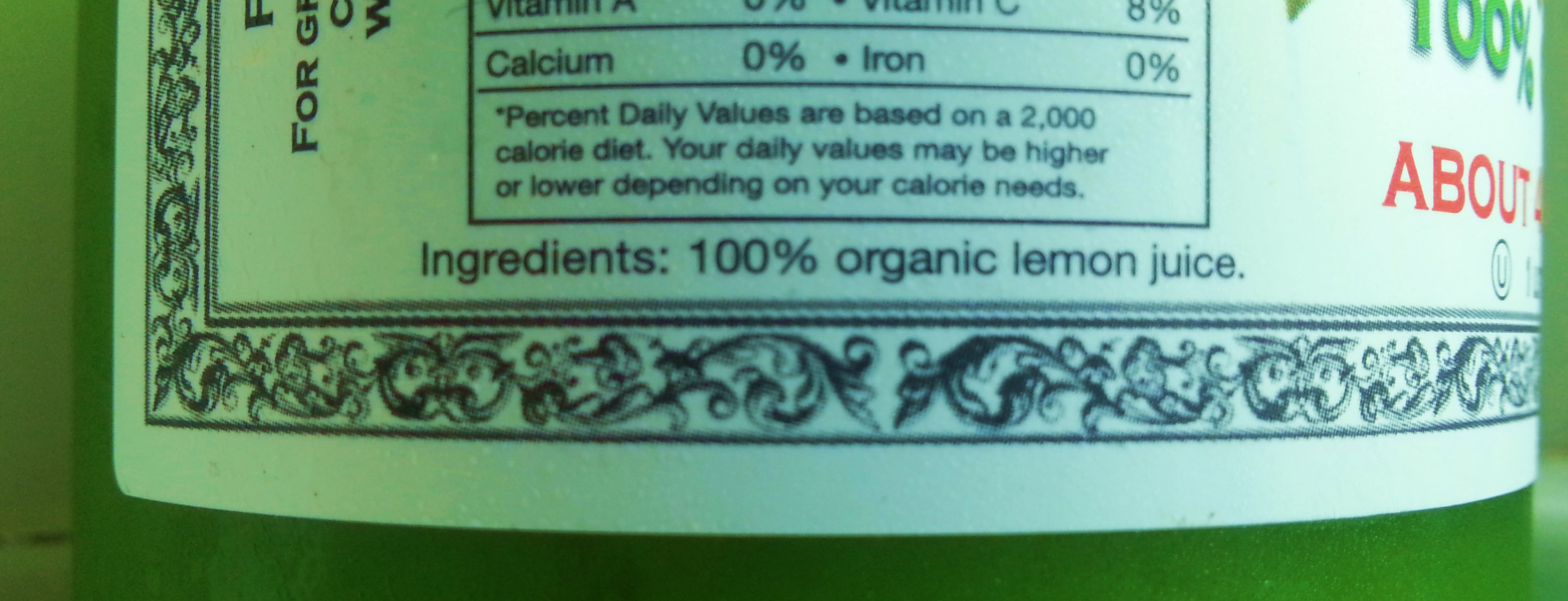
Lemonade Concentrate

Ingredients:

Lemon juice

*Natural sweetener of your choice

*”Natural” meaning found in nature, not “natural” meaning, well, whatever it means when companies put it on the front of a processed food item. “Natural” in my usage means that everything on the ingredients list would be easily recognized as food. I usually use light maple syrup, but you could use honey, sugar, agave, brown rice syrup, or whatever.

Method:

Mix up equal parts lemon juice and sweetener in a mason jar. Put the lid on, shake until combined (honey will take a long time, or you can let it sit until it dissolves), and store in the refrigerator. To make it up, put a little in the bottom of a glass or pitcher (maybe 1/8 full), and dilute to taste.

No, seriously, that’s it. If you want it to be more lemon-ey, or sweeter, or stronger, adjust accordingly. If you are adding more honey, just make sure you have time to let it sit and dissolve.

Things you can add, just for fun (but you don’t have to if it stresses you out):

Frozen blueberries, strawberries, etc. to turn it pretty colors

Fresh mint or even sage or other herbs

Sparkling water or ginger ale

Iced tea

Lime juice instead of lemon juice


Yay, summer, and yay, lemonade!

lemon juice

Other People’s Choices

Things I have heard said (not necessarily all to me) in the past week:

“What?! That baby is nine months old and woke up in the middle of the night? That’s because that mother is doing something WRONG.”

“What?! That baby sleeps in a crib in a different room? What if she NEEDS her mother?”

“You just need to tell her what to do, because she doesn’t know anything.”

“I know I do too much for my children. Way more than you.”

“I should be more like you.”

“She needs to…..”

“I’m gay, and if you have a problem with that then we have nothing to talk about.”

“I don’t like the ‘gay agenda’ and if you have a problem with that then we have nothing to talk about.”

“Paula Deen’s the worst. Hers is the face of racism and as a white person I like pointing my finger at her because it means I don’t have to deal with my own stuff.” Or on the other hand, “Why’s everyone so upset at Paula Deen? That was a long time ago and people need to just get over it. Racism was super terrible. Glad that’s over.” Ok, ok, no one actually said these exact words, but I definitely heard this subtext in a lot of places…

It’s enough to make a person’s head spin.
The reason all of these statements are lumped together in the same post is that I’m noticing a lot of us are having trouble separating ourselves from the choices of people around us. And the more we love them, the harder it is. If someone around us makes a different choice than we do, we are forced to recognize that there are different ways to do things. And if there are different ways to do things, then how do we know the way that we picked is the best? Or what if it isn’t the best? In parenting this is hard, because in many cases we won’t know if our kids end up in therapy or prison or medical school or all of the above for another 20 years or so. In religion this is hard, because it is so easy to fall into the trap worshipping our own understanding of who God is. If we are doing that, then if one part of our understanding comes into question it is easy to feel like everything is crumbling apart. In other areas, well, all I can say is that if we base our entire philosophical understanding of life on the understanding that a set of ideas is correct, then anything that appears to challenge those ideas is scary. Scary is bad, so instead of admitting that it’s scary it’s a natural human response to want to discredit something so we don’t have to deal with it. Natural human responses are not necessarily always what we should act on. Just saying.

Is there a way we can engage people around our differences without making their choices about us? Is that even possible? I try. Because I think that if I can learn about why you are doing something the way you are, I will know more. It doesn’t mean that I’ll do everything your way, and it doesn’t mean that I need you to change to validate my choices. So what does that look like in practice? I’m still working that out (I believe that’s a life-long process). Let’s take a trip through those statements again, but inside my brain.

Once more, with commentary:

“What?! That baby is nine months old and woke up in the middle of the night? That’s because that mother is doing SOMETHING WRONG.” No. No it’s not. It’s because babies are biologically designed to sleep lightly so they don’t stop breathing and die. Some babies naturally can put themselves back to sleep without crying, some babies are left to cry until they give up and go back to sleep, and some babies are picked up each time. There are as many ways to parent as there are children in the world.

“What?! That baby sleeps in a crib in a different room? What if it NEEDS its mother?” There are as many ways to parent as there are children in the world.

“You just need to tell her what to do, because she doesn’t know anything.” THERE ARE AS MANY WAYS TO PARENT AS THERE ARE CHILDREN IN THE WORLD.

“I know I do too much for my children. Way more than you.” You doing more for your children than I do for mine doesn’t mean that you are a ‘helicopter mom’ any more than it means that I don’t love my kids. Neither of those things are true. We do differently, and that’s ok. There are as many….well, you know.

“I should be more like you.” Nope. One of me is enough. I could find any number of people to back me up on this if you don’t believe me. Also, I’ve spent a lot of energy at different points trying to change myself to be like other people. It wasted my time and just made me a less effective version of myself.

“She just needs to…..” Live in a world with less judgment? Be encouraged by people who care about her? Understand her value? Eat food? Drink water? Oh…you are making a judgmental statement about her behavior again. How disappointing.

“I’m gay, and if you have a problem with that then we have nothing to talk about.” I think this came from a place of hurt because many times people take one another’s decisions very personally and sometimes do so in less than examined ways. If you know and love a gay person who is coming out and you have a problem with gay-ness, maybe try to recognize that you should probably find a safe space to process that out and don’t dump it all over him (or her). He has enough going on. Or if you do talk to him about it, please at least make sure that he knows your feelings are not his fault. He has enough going on. If you know a gay person who is coming out and do not love him, please leave him alone. You have enough going on.

“I don’t like the gay rights agenda and if you have a problem with that then we have nothing to talk about.” This attitude makes very little sense to me now, in retrospect…I hear a lot of conservative people say that homosexuality is a choice or an action, not an identity. If that is true (now that I know actual gay people I doubt very much that it’s that simple), then why should we distill our entire understanding of someone down to one thing we know about them?

“Paula Deen’s the worst. Hers is the face of racism and as a white person I like pointing my finger at her because it means I don’t have to deal with my own stuff.” Or on the other hand, “Why’s everyone so upset at Paula Deen? That was a long time ago and people need to just get over it. Racism was super terrible. Glad that’s over.” Sigh...Back away slllooowwly…please consider reading this post from Kristen Howerton or this other post that I wrote, and then maybe we can have a thoughtful conversation with each other about this.

Paula Deen, the N-word, and why “color-blindness” isn’t good enough.

In the wake of this whole Paula Deen mess, I recently heard a group of white people my own age (I am 30) discussing whether or not they could get away with saying the n-word based on what county they live in. The general consensus was that, as a white person, if you live in certain places you will “get shot or stabbed”, and other places you can use the word with impunity. There’s a whole lot I could say about that, but for now I’ll just say I found it…troubling. I do diversity work because racism is still a thing, people. People in my parents’ generation and older have told me before that we are “color-blind” now and that’s not how it used to be. First of all, not everyone in my generation is “color-blind” (see above). Second of all, I think that becoming ‘color-blind’ is not the way to fix this problem. Some of us deciding to pretend that ethnicity doesn’t exist and people aren’t at all different from us is not going to create lasting change in our culture. Because people are going to notice differences between themselves and other people, and if we don’t find ways to actively and positively engage people around our differences, we leave an empty space that can be filled with all kinds of fear and ignorance. We can do better. We need to do better.

This Paula Deen hullaballoo is not about persecuting a poor old rich white lady, although unfortunately in their anger some people have taken it to that place. It’s about setting a precedent for how we, as a culture, are going to refer to our fellow human beings. Racism is still a thing (and whatever we might wish, it does not belong solely to days gone by when Ms. Deen and many of our grandparents regularly made those types of comments), and that’s one reason this is a big deal. My wise, wise friend K. (who I respect very much and may someday convince to write a guest post for me) says, “What I’m always afraid of though, is what lies behind the facade. People say all kinds of things, in public and in private. But honestly, what concerns me more is what people say behind closed doors. It’s one thing to say something in public — at least I know where you stand, you know? But it’s those things that people say & think that they KNOW are wrong, racist, judgmental, and offensive. They say them in quiet then turn around and smile in your face. They work beside you, and serve you coffee — yet all the while they are harboring these destructive and hurtful beliefs. Like Paula Deen — except now she got caught. It’s those quiet minds that, in a sense, give us the most to worry about.”
In that same overheard conversation, someone said, “I wouldn’t use that word, because I respect all races.” I suppose that is a good start, although I think it might be even better to acknowledge that we are not in fact many races. My other wise, wise friend C. says that we are all the same human race. Saying that you respect all “races” creates a false sense of difference between humans and keeps us from connecting. Saying that you are “color-blind” (sorry for all the quotes, you guys…I’m using words that I don’t typically use and it’s kind of uncomfortable for me) attempts to cover up differences because we know that certain differences are not ok to notice in certain ways (like skin color, accent, etc.). So we pretend that everyone is all completely the same. K. also had this to say, and I thought it was worth passing along: “There’s nothing inherently wrong about noticing those things. It’s a fact that people come in all shades. It’s a fact that we all speak different languages and have different hair or cultural ways of being. That’s what makes this world a beautiful and interesting place. But when those things are assigned or labeled as ‘bad’ or ‘less than’ or ‘other,’ that’s when it becomes problematic.” We have noticed and focused entirely on the differences for so long, and not at all on the commonalities. As a result, we as a culture are now very clumsy about noticing difference. I have been working for several years at this point to create ways to notice that people are different from me without passing judgment on them for it. One thing I found out very quickly: making that choice means you will be swimming against some very strong currents. But as is often the case with swimming against the current, the rewards are tangible and great. I do that work because I have real hope that someday, my daughter and my son won’t have to listen to people dismissing the humanity of others with such ease. And if they do, at least they’ll have heard me say that it’s wrong.

Other People’s Feelings

When I was younger, everyone thought I was really brave. People thought this, I am told, because I would say things that no one else would. I was unapologetically and uncompromisingly myself almost every minute of every day. I was unafraid to speak out truth even if it would not be well received.

But is it really brave to walk along the edge of a cliff if you don’t know what falling is? Looking back I would say I was just entirely clueless. I mean really, hopelessly clueless. And not in a cute, Alicia Silverstone sort of way (if you weren’t a teenager in the 90s, nevermind about that reference).

A lot of factors contributed to my learning of Other People’s Feelings. First, my senior year of college I lived with three really amazing girls and at some point they kindly, gently, and lovingly pulled me aside and said, “You know, you’re kind of a jerk sometimes.”

I said, “Really?! I had no idea! Can you help me try not to be one?” They tried. I think it worked sometimes. I made a lot of progress that year. Being married has been a HUGE catalyst for change in many ways, but especially in the Other People’s Feelings area. My husband will say things to me like, “When this person makes this face {example expression}, it means you should be careful. And when they make this face {other example expression}, it means you need to stop talking right away.” Seriously, that man deserves a medal. 

Parenting also helped me realize this, but in a less positive way. If/when you have kids (well, maybe not when YOU have kids…maybe you’ll live in a perfect bubble of non-judgment and sleepful nights. Ahem.), lots of people have lots of feelings about what you do with them. And for some reason, a lot of people are really comfortable sharing all of their feelings with you while you are in the very vulnerable space of learning to be utterly responsible for a tiny human. It’s odd, but it’s a thing.

So I get it. Other people have feelings. But now, the question becomes how to deal with it. At this point I have to figure out how much of other people’s stuff belongs to me. And it’s safe to say that some of it does. I spent the first part of my life thinking none of it did, and there are relationships I missed out on because of that.

And yet, I am simply not able to keep my mouth shut and disengage entirely. There are moments when this does seem tempting; as an extrovert I crave positive interaction and in moments full of negativity I do want to hide from everyone because it feels like I’ll never be able to sort out everyone’s emotions. The hardest and most freeing thing about that statement is that it’s entirely true. I’ll never, ever be able to make everything ok for everyone. I’m not God. And I don’t have to be.

The most confusing thing for me right now is when other people tell me that their feelings belong to me. Sometimes this is partially true. If I’ve been a jerk, for instance, I need to earnestly apologize (thank you, college roommates). But it’s not up to me for them to accept my apology. It’s not my job to do whatever will make someone happy instead of mad at me; especially if it pricks my conscience. I already wrote about that another time. You can read that if you want to. It’s confusing, but it’s work worth doing. Because I want to learn to live at peace (shalom, ‘the way it’s really supposed to be’ kind of peace, not just lack of overt conflict) with myself and with others.

To put it in movie terms: The beginning of my life swirled about me in a lovely way, like The Matrix swirled brilliantly around Keanu Reeves even though he is a terrible actor. But after he was supposed to play something other than a dumb-guy-newly-turned-hero, his lack of talent could no longer be overshadowed and the other movies were terrible. I’m trying to avoid that. I’m looking to be Gandalf, not Neo. Hither by Thy help I’m come. And I hope by Thy good pleasure safely to arrive at home.

Mei-mei

You guys, my little brother got married. To the most surprising girl.

She’s beautiful, quiet, and brave. She founded a sorority (did you know you could do that? I didn’t). She’s very much an introvert, so I think the idea of being the one in the white dress that everyone was staring at, while on some level what ‘every girl dreams of’ (I didn’t, but I hear it’s a thing), was kind of terrifying for her. And planning a wedding; well, if you’ve never done that before I’ll just say that if you can survive planning a wedding with someone (and their family! and your family! exclamation point!) then your marriage is off to a great start.

I think it was really super brave of her to have a big fancy wedding. When you’d rather be in the back of the room writing instead of in the front of the room dancing it takes a lot to not run and hide. That doesn’t mean that weddings aren’t fun. They had fun too, dancing and seeing their friends and eating. But similar to parenting, my observation is that everyone wants to help you, everyone wants the best for you, and lots of people ask you the same questions over and over.

And now after the wedding, they are packing up and headed for Canada. My brother found work on a cattle ranch and will learn that trade, and my sister-in-law will help with general farm work. I think that’s awesome. She’s going to take care of chickens! E will randomly say, “I’m sad, because my Auntie L is far away.” Sorry little brother, she really does love you too. But you’re not a girl. Hope you understand. I’m very glad that this move is happening after skype became a thing.

Doesn’t sister-in-law sound kind of awkward? I think it is. You pick this person to marry, and you bind yourself to that person for life. And that person comes already bound to these other people. And they helped shape the person you picked and that means they have great value. But while they are definitely family, you haven’t known each other for years; even though it seems you are ‘supposed’ to be immediately close since now you are something like sisters to one another, it’s tricky. You don’t know each other well enough to gauge what to say and how to say it (to be fair, I am still learning that with the people who HAVE known me for my whole life…ahem). While the in-law relationship can be tricky, I can say first-hand that it can be incredibly worth it to learn to be close.

So L, I have been thinking of calling you ‘mei-mei’. It means ‘little sister’ in chinese and is how girls refer to each other affectionately in Firefly (I know, cheesy sci-fi, but you don’t have to watch it to be called that…although you could. Watch it. I started with the movie first and then watched the series, and honestly I think I liked it more quickly because of that. But I digress.).

I think mei-mei sounds less…like the wicked step-sister from a fairy tale. And while I’ve never been a big sister to a girl before, I’d really like to think of you that way. I love my brother a lot and I love you too and I am excited to see how our relationship develops over time. From what I’ve seen on tv, I think we’re off to a good sisterly start. You already ‘stole’ some of my favorite jeans. Psssst….I know I said I want them back, but I really think you should take them to Canada with you if you want to. They look way cute on you and I’ll pretty definitely never be that size again! If you still have them when E is that size, maybe she can have them back. It’s really ok.

I thought a lot during your wedding planning time about how I could be helpful, though I know sometimes I was clumsy about it. I would apologize, but I tell my daughter it means more if you apologize when you actually mean to change and while I can try to curb my social short comings, I seem completely unable to shut them out entirely. So here are some things you can expect from me:

I will say awkward things awkwardly. I will NOT mean them the way that they sound. It runs in our family. My brother does it too. Maybe even more than me. Good luck with that. If you haven’t already I bet you’ll get really great at saying, “Do you mean this? Or this?” J can probably speak to that more than me. God bless him.

I will assume the best of you and your intentions. In a culture where getting offended is something of a national pastime, I will choose not to be offended by things that I can tell you don’t intend offense by. That may sound like a small thing. It’s not.

I will offer to do things for you. It will not hurt my feelings if you say no. I just want good things for you and D.


So best wishes as you go about the business of being married people. Please know that you are loved and cared about. Below is a Dietrich Bonhoeffer quote that was important to us as we started out, and it is our prayer for you too.

20130612_095614